Peru is a land of ancient history, from the high Andes mountains to the Pacific coast. When the Spanish arrived in the 16th century, the meeting of the Inca culture and the Spanish culture created a unique and rich cuisine called mestizaje. This mix brought new flavors and techniques to both sides of the ocean.
Like Mexico, Spain brought many new foods to Peru. But Peru also gave many important native products to Spain, and later, to the world. These foods are now essential in kitchens everywhere.
The Potato: Peru’s gift to the World
The potato was first grown high in the Andes mountains over 8,000 years ago. The Incas had great knowledge of growing potatoes, and they ate them daily. There are thousands of types of potatoes in Peru, in many colors and sizes.
Spanish explorers brought the potato to Europe in the second half of the 16th century. At first, many Europeans did not trust the potato because they thought it was toxic or only good for animals.
Slowly, the potato became popular, especially in Ireland and Germany. It was easy to grow, very nutritious, and produced a lot of food, saving many countries from famine. Today, the potato is the fourth largest food crop in the world.
The Quinoa grain
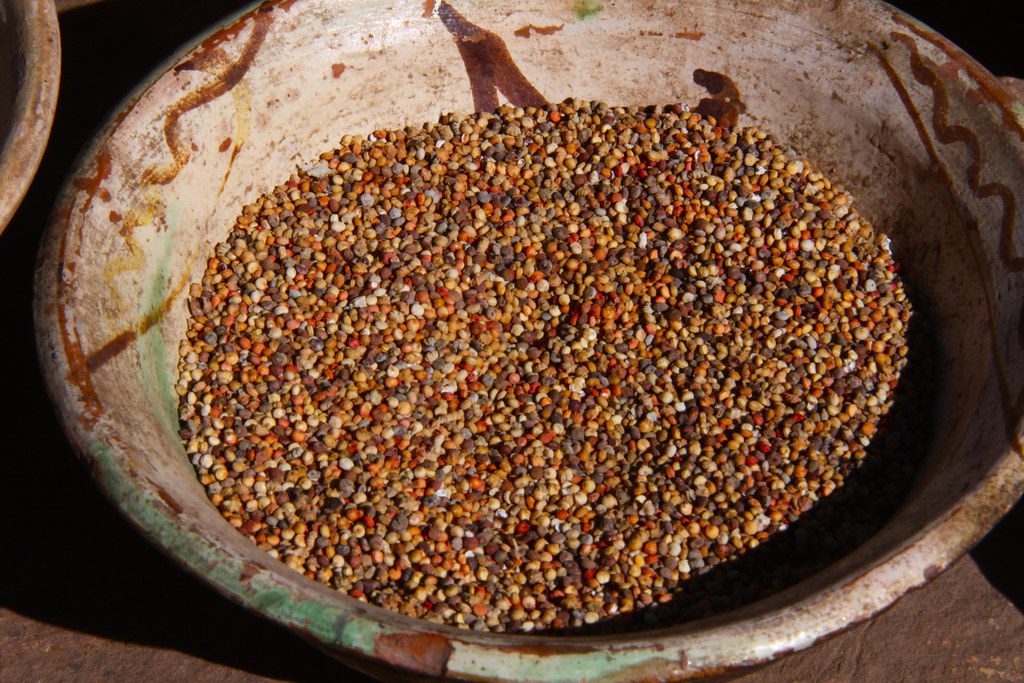
Peru also gave the world other valuable foods that are now staples in many cuisines: The quinoa grain was a sacred food for the Incas, who called it chisiya mama (“mother of all grains”). The Spanish tried to stop its cultivation because it was linked to native rituals, but it survived in small areas. Today, quinoa is popular globally because it is a complete protein and very healthy.
The Chili Pepper: Giving Flavor to the Old World
The chili pepper or ají has a shared history, with origins in both Mesoamerica, (Mexico) and the Andes region (Peru).
The Andes region is home to a wide variety of chilies, like the famous ají amarillo (yellow chili), which gives Peruvian food its unique flavor.
Before the Spanish conquest, Europeans used black pepper as their main spice. Chilies were quickly taken to Europe and then spread to Africa and Asia. They became a cheaper and easier way to add flavor and heat to food, changing the cuisine of many countries.
A Legacy of Flavor and Nutrition
The meeting of cultures in Peru led to an incredible food exchange. While Spain brought livestock and wheat, Peru’s native foods—especially the potato, quinoa, and chili peppers—became essential to global agriculture and cooking.
These products are Peru’s legacy, still bringing rich flavor and high nutrition to tables around the world.
Leave a Reply